






 OrnikarTraining project · 2026
Learning to drive without losing track
Turning the app into a learning space: each student finds their own pace, and their path to a driving licence.
- The problem
- Each booking stands alone: nothing links the last lesson to the next one, and nothing flags an unusual gap.
- What we designed
- Personalised onboarding, calendar and skills-based tracking.
- What the tests showed
- Five sessions were enough to add nuance to all three of our hypotheses. None came out intact.
- My part
- I worked on the onboarding and the lesson booking experience.
- Deliverable
- mockups, prototype
- Role
- research, UI design, user testing
- Context
- training project, The Design Crew
- Team
- 3 product designers, shared work on every feature
- Methods
- 6 interviews, 5 user tests
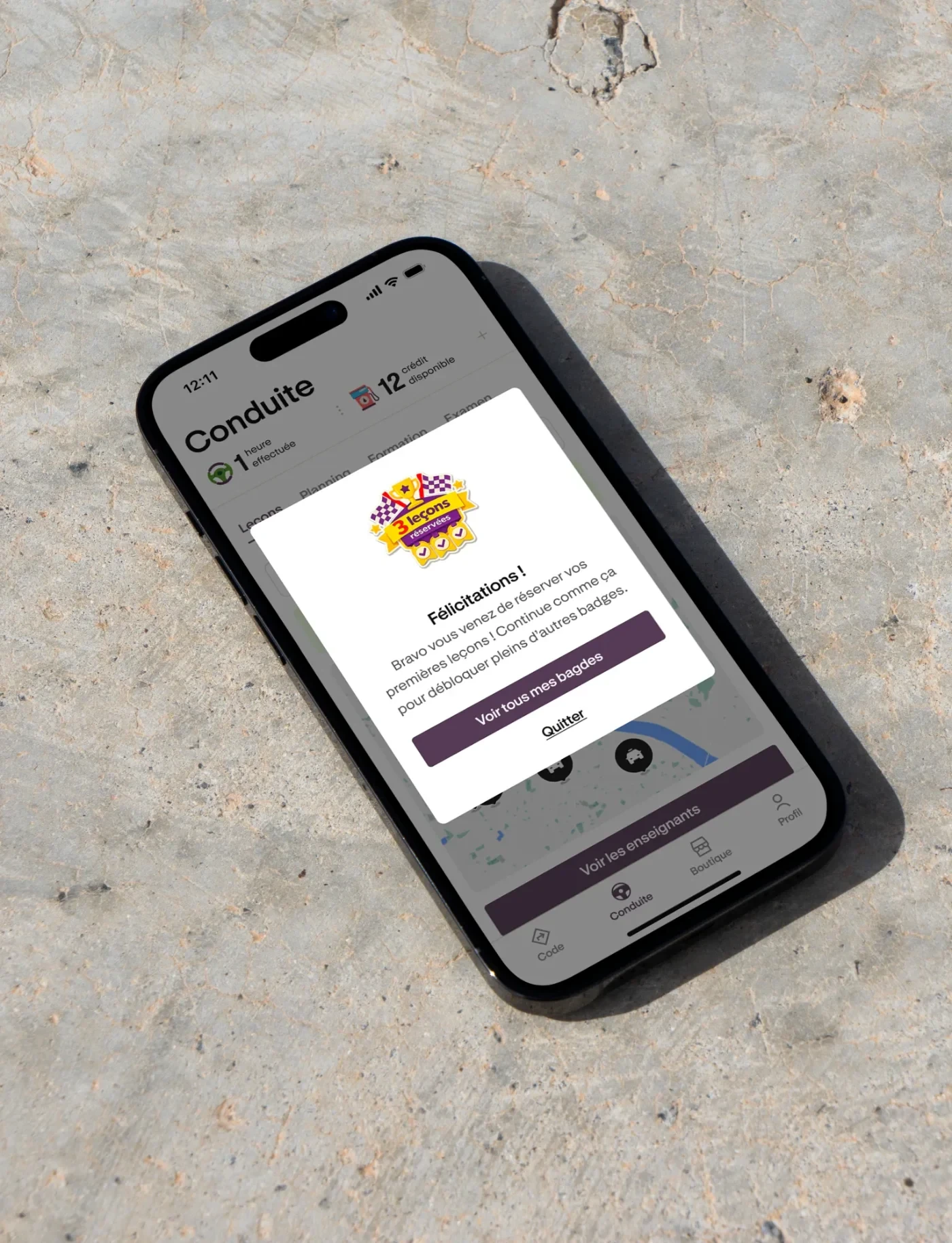
Context
Motivation does not depend on the tool, but on the pace it helps you keep.
Organising driving lessons, between visibility and motivation
Learning to drive means keeping up a pace over several months. The app supports booking, not regularity.
Interview findings
- 6 out of 6: Taking lessons at regular intervals is the main factor in successLong gaps lead to forgetting, doubt and discouragement
- 5 out of 6: Make a real effort to get the same instructor againTrust in the instructor becomes a reason to book
- 3 out of 6: Had only a vague idea of their actual levelSeeing many different instructors breaks the follow-up on their learning
- 3 out of 6: Do not have stable availability
How might we establish a routine and follow-up to support students, help them progress and build their confidence as they learn to drive?
Discovery
Do not remind students to book: have them decide their pace from the start.
From reactive follow-up to a structured course
Looking elsewhere for how a habit holds up over time.
- Automatic reminders by notificationTreats the symptom: students forget less, but do not plan any moreDropped
- Subscribing to a recurring time slotAssumes stable availability that three students out of six do not haveDropped
- Preferences captured at sign-upThe routine is decided before the first lesson, not after the thirdKept
- Progress made visible through skillsAddresses the unclear sense of level reported by three students out of sixKept
Design
Progress is shown in skills, never in number of hours.
Personalised onboarding, calendar and skills-based tracking
Students set their preferences at sign-up; the calendar and the skills-based tracking build on them. Everything stays within the Ornikar design system.
Design principles
- Decide earlyPreferences are set at sign-up, not along the way.
- Within the Ornikar systemThe questionnaire, calendar and badges extend the existing app, with no new component.
User flows
Personalised onboarding
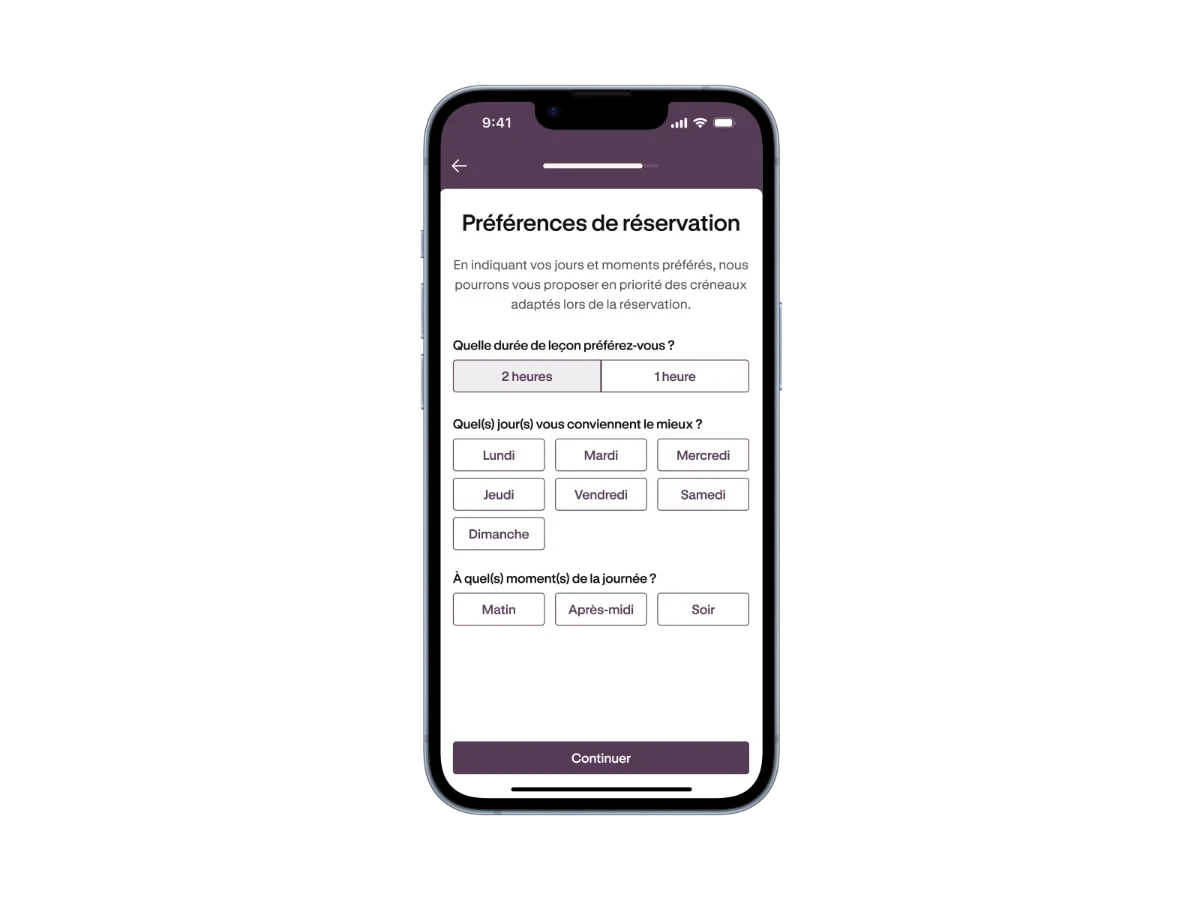 Preferences setDays, time slots and lesson length
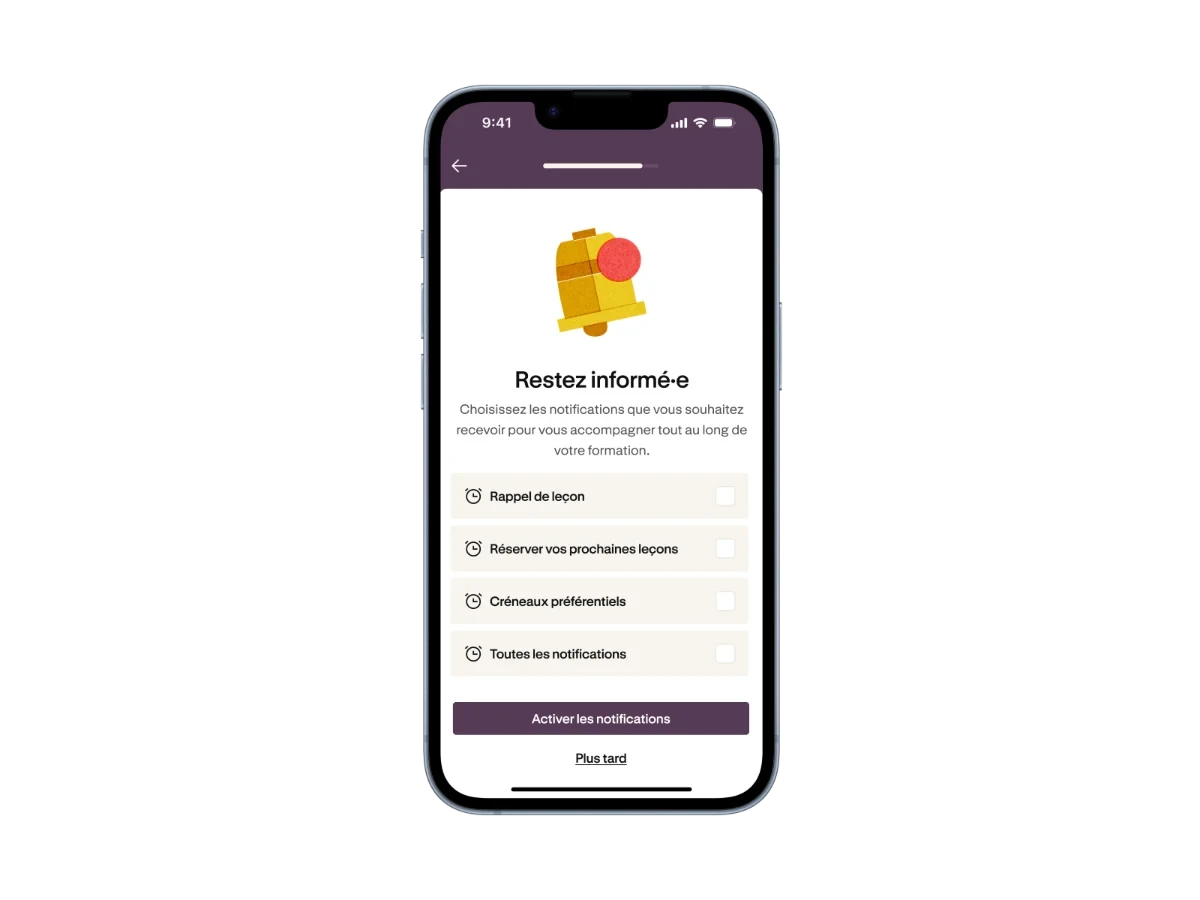 Notifications chosenThe student decides on their reminders
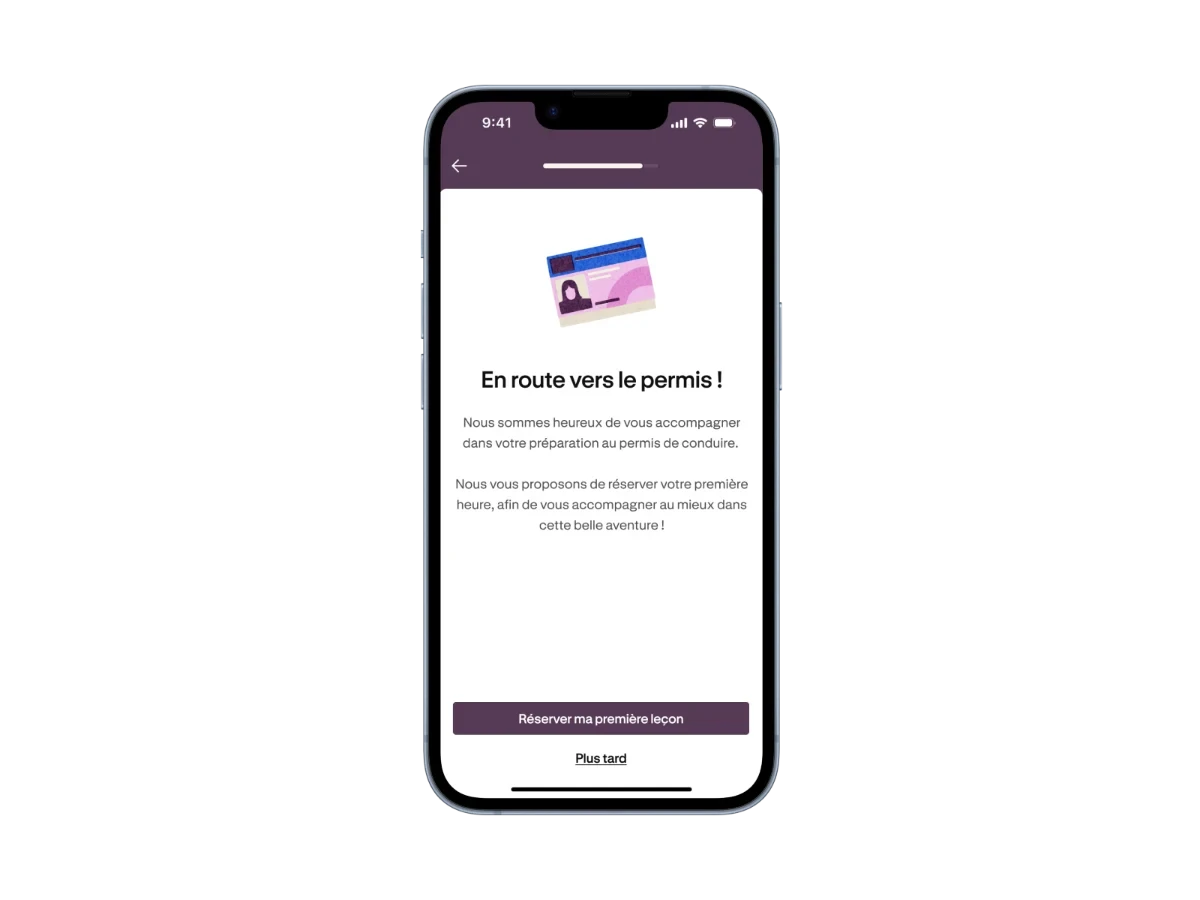 First lessonThe course starts with a set pace
Capture preferences before the first lesson rather than after the third.
Smart calendar
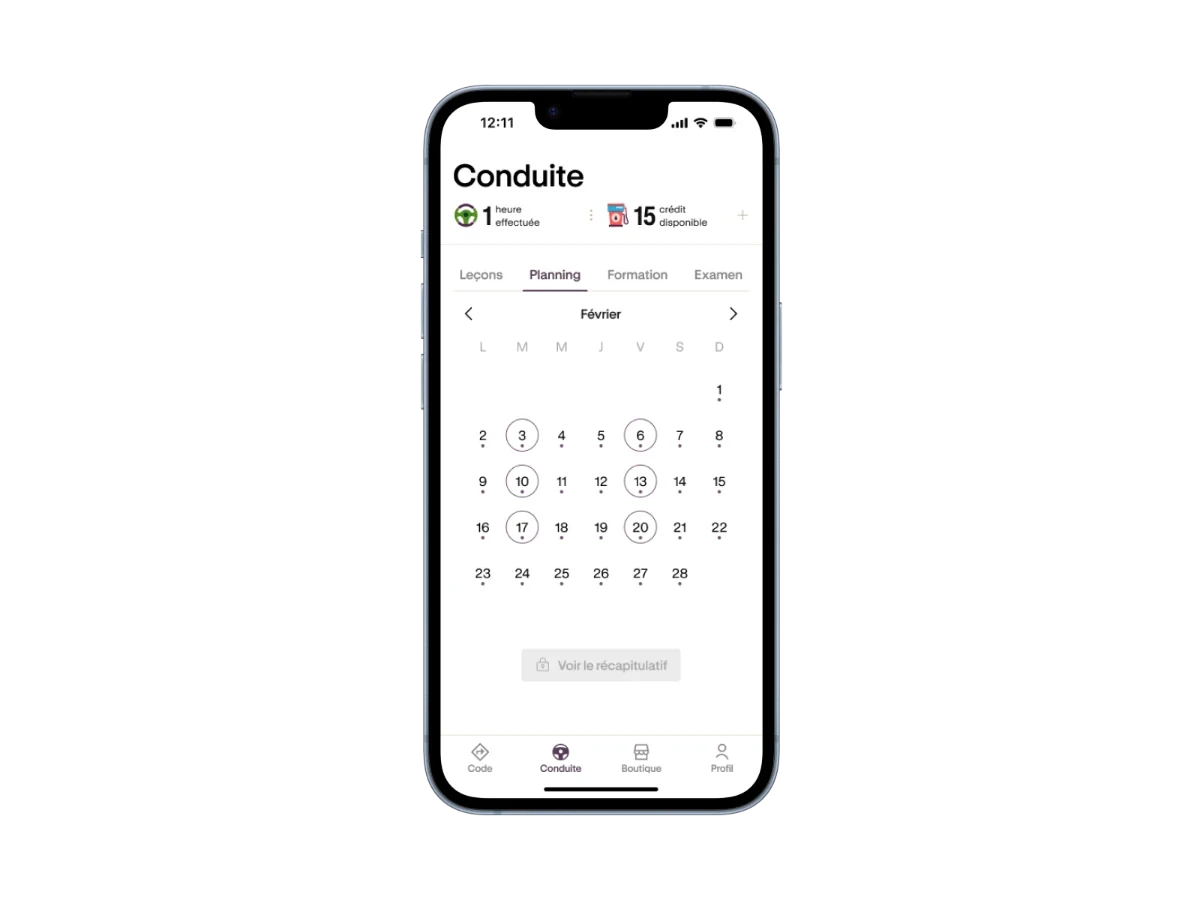 Month viewAvailability at a glance
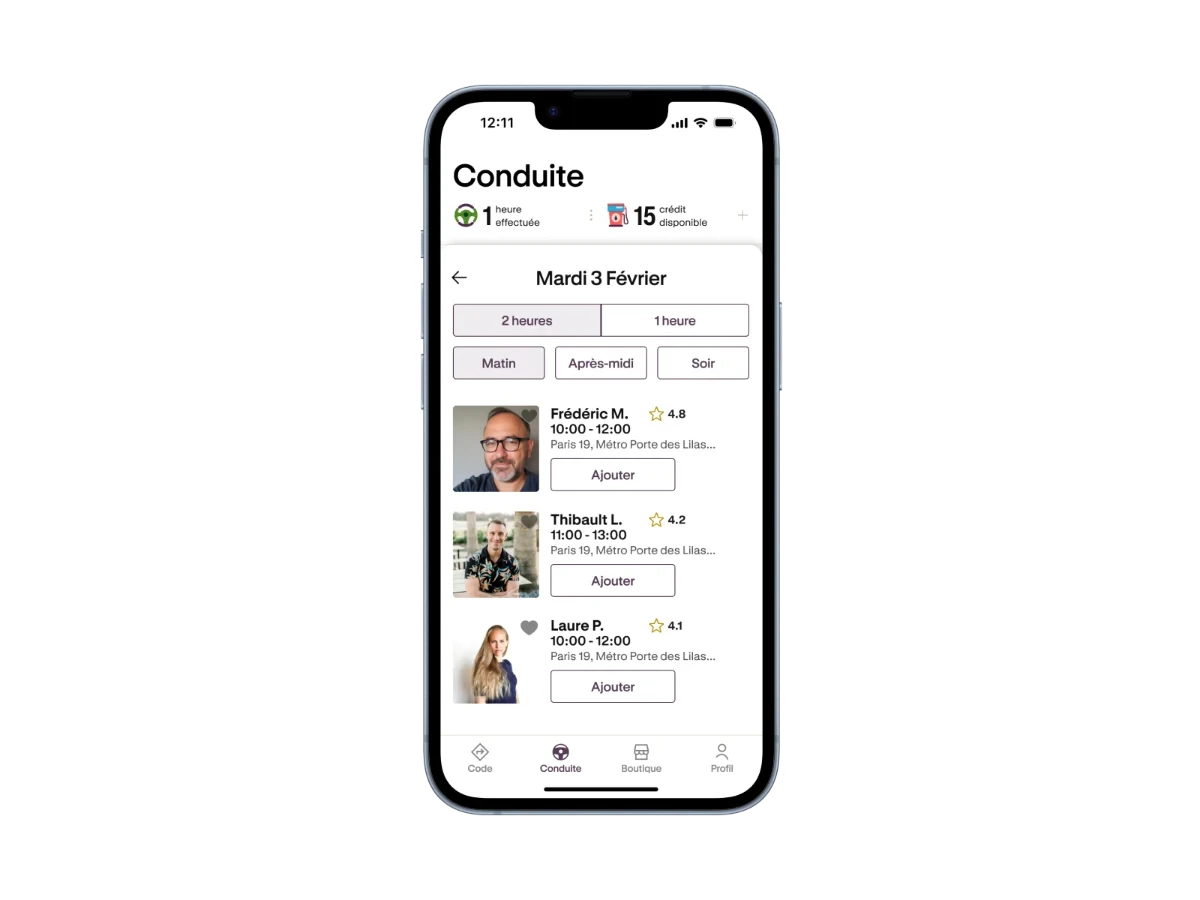 Choosing a slotLength, time and instructor
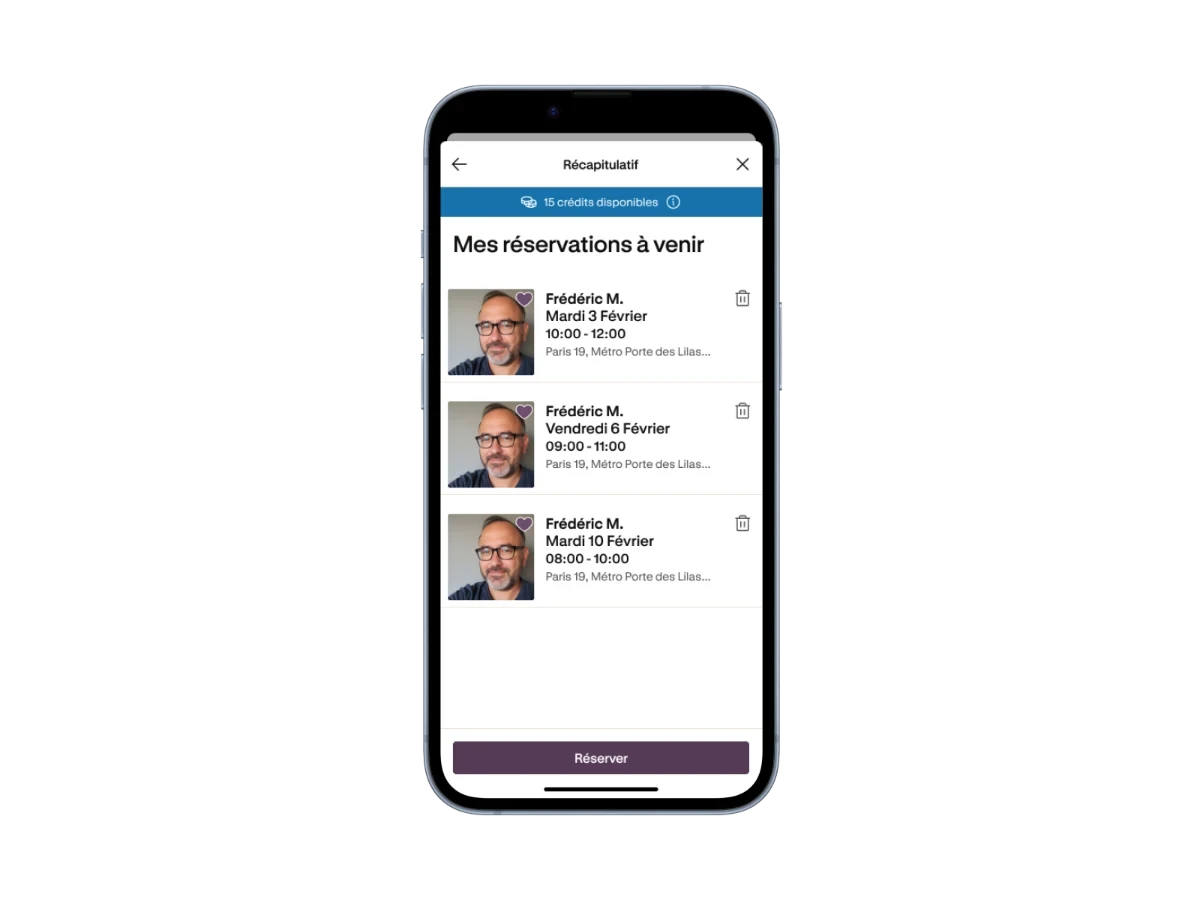 SummarySeveral lessons booked in one go
An overview rather than a list of upcoming bookings.
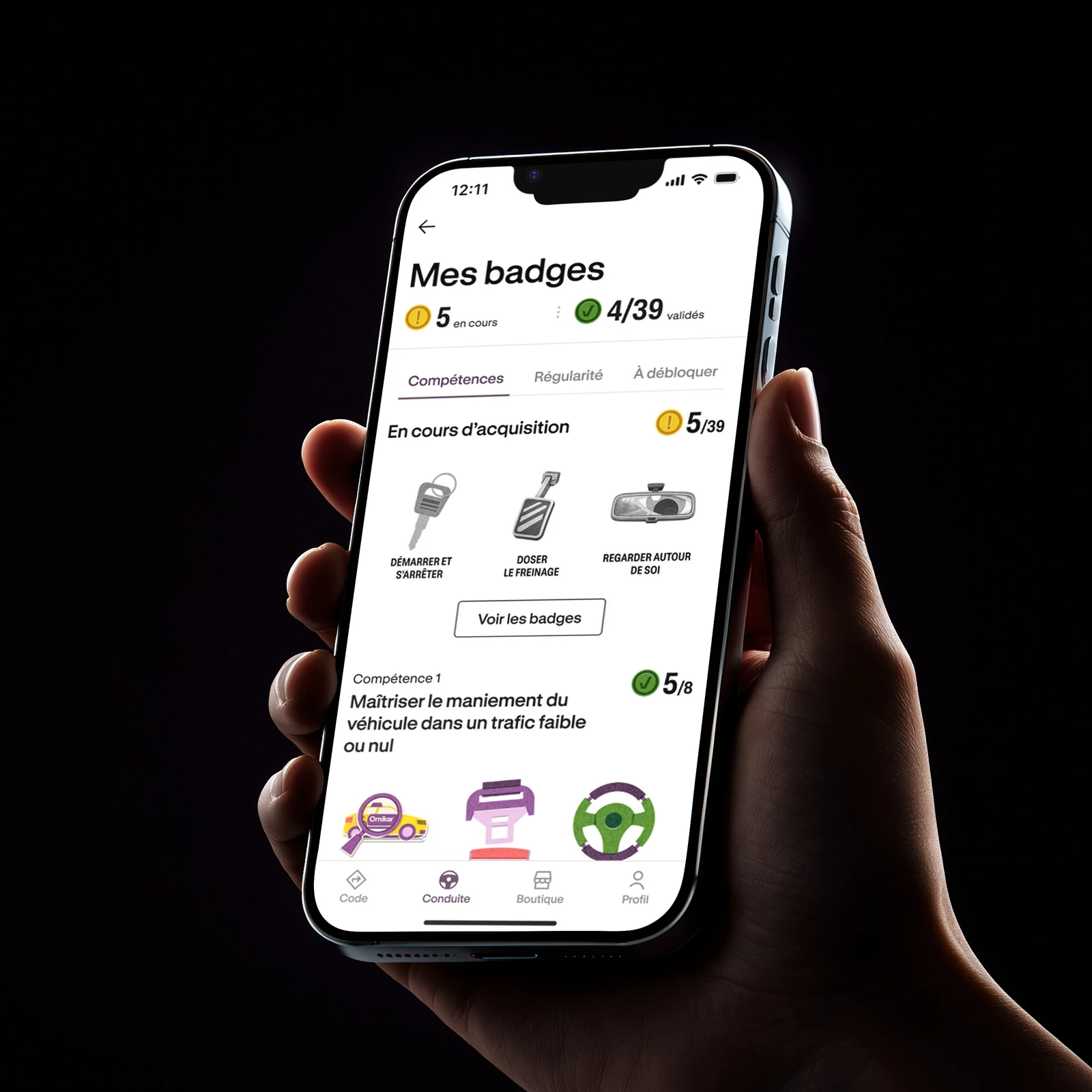
Skills-based tracking
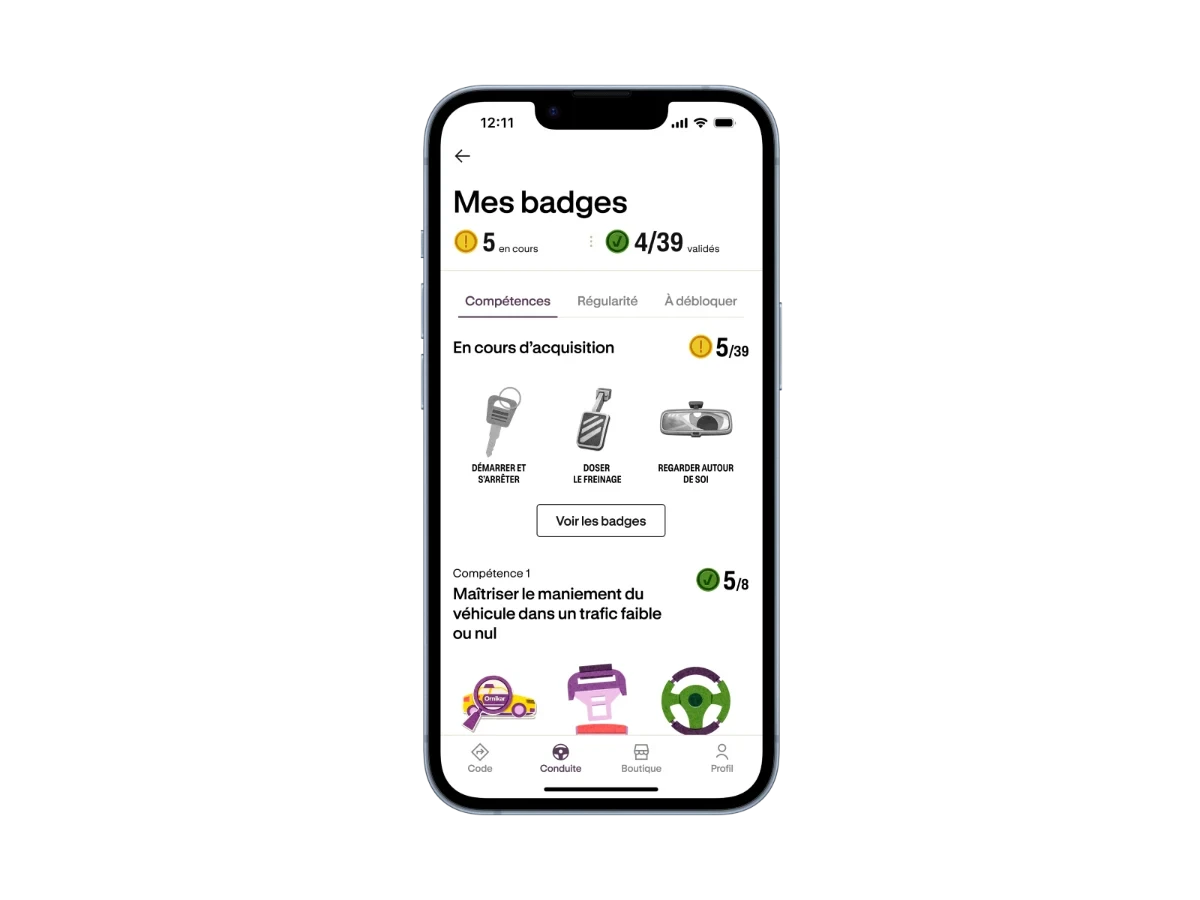 Skills in progressWhere I really stand
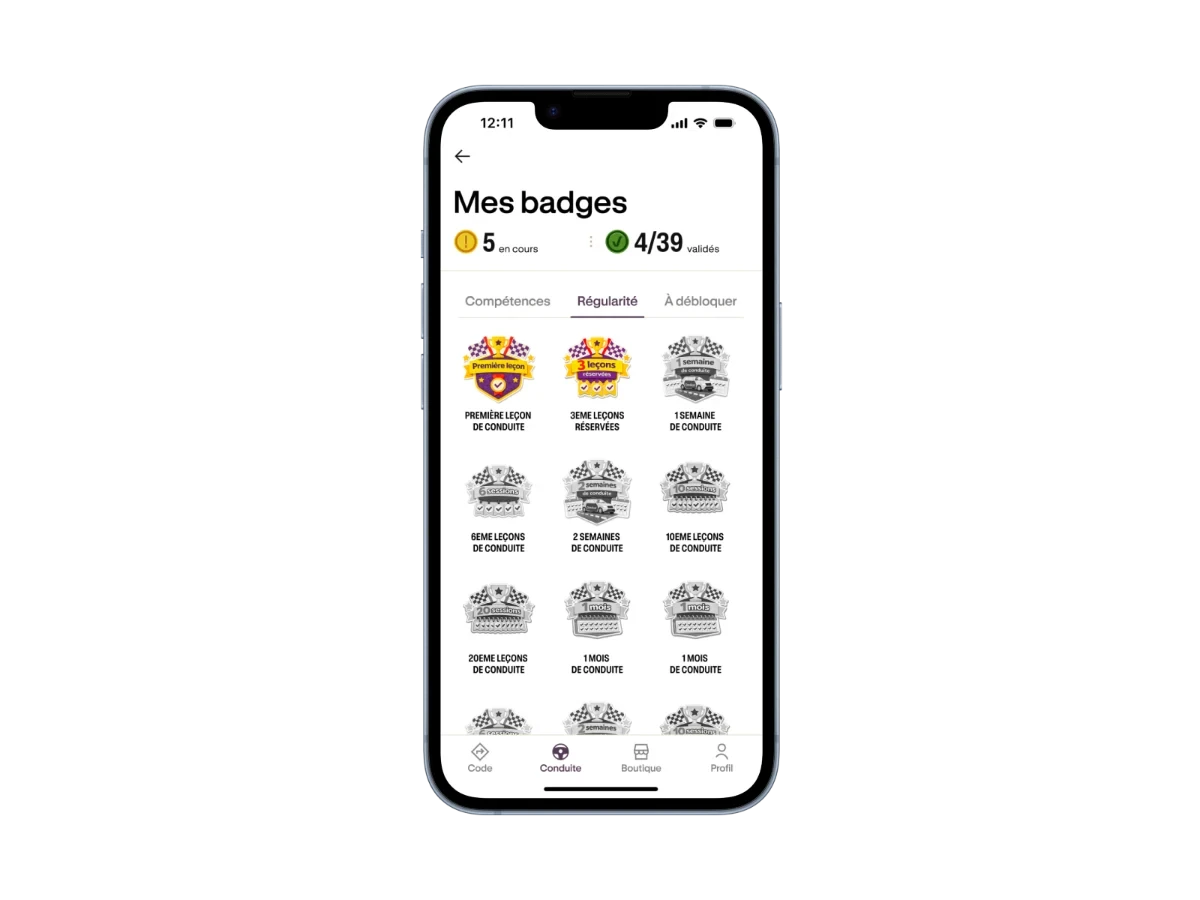 Badges earnedThe milestones reached
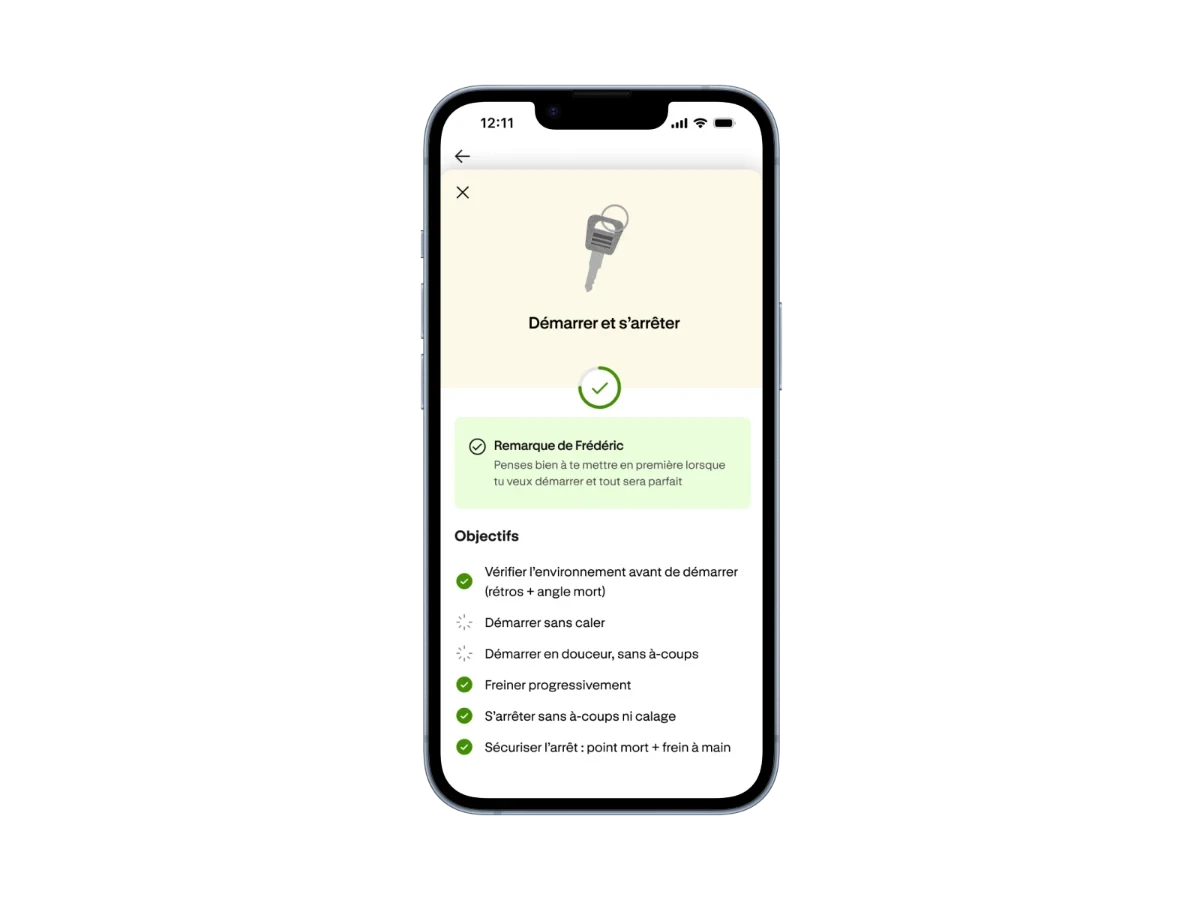 Skill detailsWhat is left to validate
Skills rather than an hour counter.
User testing
5/5 did not guess the multi-select gesture.
Five one-to-one sessions on an interactive prototype, each covering all three flows, with participants asked to think aloud.
Hypotheses tested
| Hypothesis | Result | Follow-up |
|---|---|---|
| Personalised onboardingPartly | 2/5 complete the onboarding | Saturday and Sunday split into separate options in the onboarding. |
| Lesson calendarPartly | 5/5 click the pop-in to discover the calendar | To iterate: booking several lessons at once, to be rethought entirely. |
| Badges & progressPartly | 3/5 find the page motivating and playful | To clarify: how dense the tracking is. |
Decisions
2/5 got stuck on the level of detail
Saturday and Sunday split into separate options in the onboarding.
5/5 did not understand the slide
Nobody guessed the multi-select gesture.
Retrospective
Six students out of six mentioned regularity. That figure, not a hunch, set the direction.
Six interviews, five tests, three features and one major finding left unanswered.
What I learned
- No hypothesis left intactFive sessions were enough to add nuance to all three of our hypotheses. None came out intact.
Doing it differently
Three features before we had dealt with the second finding.
Continuity with the instructor came up with five students out of six, and none of the three proposals tackles it.
- Rethink multiple booking entirelyNobody guessed the selection gesture
- Address continuity with the instructorThe strongest finding, still without a product answer
- Measure the average time between two lessons after one month